
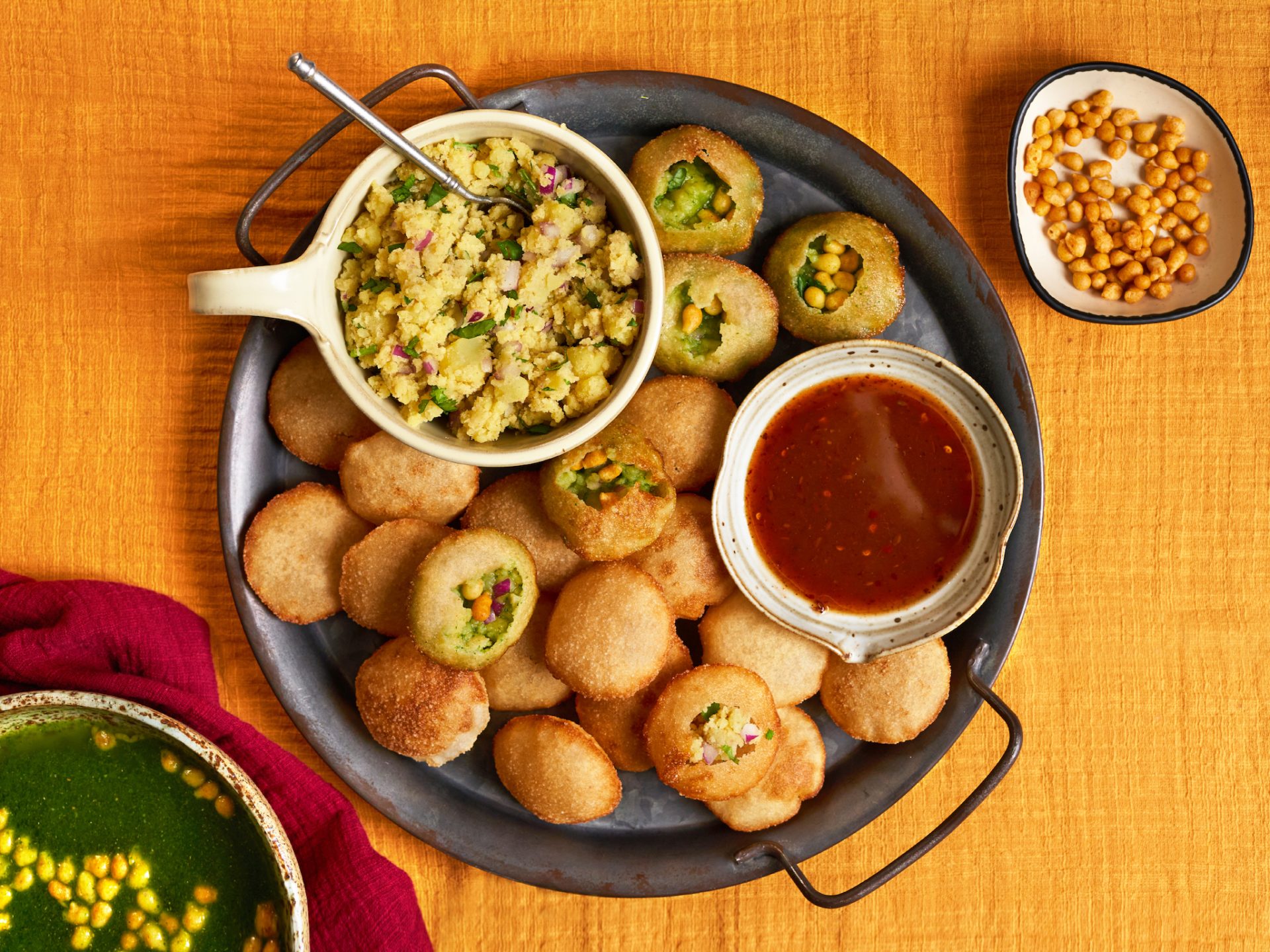
One of the most recognizable and popular street snacks in India and many other South Asian countries is pani puri. Due to its distinctive blend of flavors and textures, pani puri, also known by other regional names like golgappa, phuchka, and puchka, has a particular place in foodies’ hearts. It is an experience that simultaneously combines the sour, spicy, sweet, and crunchy flavors, making it more than just a snack. In order to completely comprehend pani puri, one must investigate its components, cultural importance, variations, and the simple delight it offers to its consumers.
Small, crispy, hollow puris made from a dough of wheat flour or semolina make up the main component of pani puri. Deep-frying these puris causes them to swell up and turn golden and crunchy. What fills these fragile shells is what gives pani puri its enchantment. The puris are typically filled with mashed potatoes, chickpeas, sprouting moong beans, or cooked white peas, as well as a concoction of flavored water known as “pani.” In order to give the pani a sharp, tangy, and spicy taste that goes well with the mild stuffing inside, it is usually made with tamarind, mint, coriander, black salt, chaat masala, and a mixture of spices.
Eating pani puri is a special and engaging experience. The puri is eaten entire in a single bite after being carefully cracked open and filled with the filling and hot, sour water. A symphony of sensations is produced by the contrast between the soft, savory filling and the crisp puri and the explosion of flavored liquid inside. Each mouthful of this snack is supposed to be consumed fast, leaving the palette feeling refreshed and enticed to return for more.
The popularity of pani puri is enormous throughout India and cuts across social and economic divides. It is frequently seen at busy street corners, fairs, and marketplaces where small stalls devoted to this snack are put up by merchants. Because of its quick preparation and generally low cost, it is accessible to everyone and fits in with city dwellers’ hectic schedules. In addition to being food, pani puri evokes fond memories of early years, get-togethers, and informal get-togethers with friends for many people.
Although the exact history of pani puri is sometimes disputed, many food historians believe it originated in northern India, most likely in the areas surrounding Punjab or Uttar Pradesh. It has also changed as a result of Mughal influences, which included the popularity of fried flatbread and tasty fillings. As pani puri spread throughout the Indian subcontinent over centuries, it underwent significant regional variations in response to local ingredients and tastes.
The adaptability of pani puri is one of its noteworthy features. By altering the contents, pani flavor, and accompaniments, different locations give the snack a unique spin. Pani in Mumbai is typically highly acidic and spicy, with a touch of sweetness. The tamarind water and spicy mashed potatoes inside the phuchka are what make it so well-known in Kolkata. A milder and sweeter variant made with boiling moong beans and mint water is popular in Gujarat and Rajasthan. Additionally, some establishments serve flavored pani variants, such as lemon-flavored water or jaljeera, a beverage made with cumin.
Beyond its flavor variants, pani puri is frequently served with other snacks like sev puri or bhel puri, which are also members of the “chaat” family of savory Indian street foods, which is renowned for its delightfully complex blend of flavors. When taken as a whole, these snacks capture India’s thriving street food culture, which places a strong emphasis on strong, multi-layered flavors and sensory contrasts.
Despite having a straightforward idea, making pani puri requires some skill. It takes talent to lay out the dough thinly and fry it exactly so to get the proper crispy, puffed texture without absorbing too much oil while making the perfect puri. The pani itself is a work of art, combining the freshness of mint and coriander, the sourness of tamarind, and the heat of black salt and green chilies. With the potatoes or chickpeas providing body and a subtle taste to balance the potent spices, the filling should enhance rather than overshadow the pani.
Pani puri eating is frequently done in groups. People congregate at street kiosks, ordering multiple rounds and conversing and laughing while they eat. In order to improve the freshness and flavor, the vendor typically makes each puri fresh, stuffing it with pani and pani on the spot. The snack’s appeal is enhanced by its social component, which turns it into a chance to bond and share a common cultural experience in addition to sating hunger.
Pani puri is a light snack that is good for you, but it is best eaten in moderation because it is fried and frequently served with spicy water. The water, which is full of spices and herbs, can help with digestion, and the puris are crispy without being too heavy. However, while eating street food, hygiene is a major factor, and picking vendors who keep their food clean is crucial.
Pani puri has moved from the streets to fancy restaurants and fusion cuisine in recent years. Using gourmet ingredients or incorporating it into multi-course dinners, chefs have experimented with deconstructed versions. However, the essence of pani puri stays the same, regardless of how elegantly it is presented: a tiny, crispy ball with a savory bite that satisfies the senses and a burst of flavorful water.
Pani puri introduces many people outside of India to Indian street food and culture. Pani puri is served in food festivals, foreign marketplaces, and Indian eateries all around the world, frequently with minor modifications to accommodate regional tastes. Its enduring appeal due to its lively flavors and enjoyable eating experience is shown in its widespread popularity.
Pani puri is much more than just a snack, to sum up. It is a culinary custom rich with social ties, culture, and history. Millions of people are enthralled by its unmatched flavor combination of savory fillings, spicy-tangy water, and crunchy puris. Pani puri is still a representation of India’s rich culinary legacy and the delight of sharing small pleasures, whether it is consumed at a restaurant located halfway around the world, on a busy street in Mumbai, or during a festival in Kolkata. It honors taste, camaraderie, and the lively essence of street food culture.