
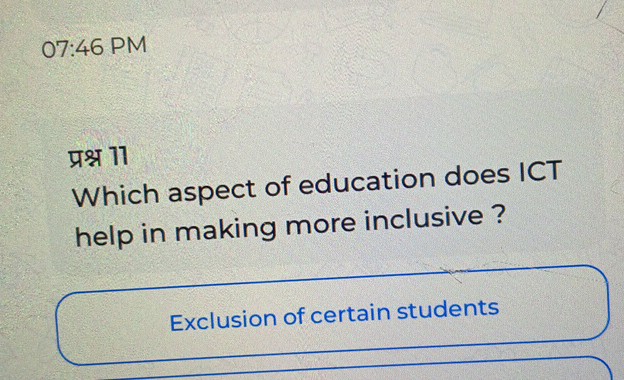
In the modern world, education is essential for forming both individuals and societies. However, issues with equality, diversity, and accessibility frequently plague established educational systems. ICT, or information and communication technology, has become a potent instrument that has the potential to revolutionize education by fostering inclusivity. Ensuring that students from diverse origins, skill levels, and situations have equal opportunities to study and thrive is known as inclusivity in education. By addressing a number of important facets of education, removing obstacles, and creating an atmosphere in which everyone can fully participate, ICT helps achieve this goal.
Access is one of the most important areas of education that ICT improves. It might be challenging for many students to regularly attend class or obtain high-quality educational resources, particularly those who live in isolated, rural, or underserved locations. ICT offers solutions by making it possible for students to access digital libraries, online courses, and remote learning from anywhere in the world. Students who previously had little or no access to formal education can now engage with instructional information, communicate with teachers, and take part in learning activities thanks to digital devices and internet connectivity. This increase in access provides education to underserved communities and aids in bridging the gap between urban and rural areas.
Additionally, by facilitating individualized and flexible learning experiences, ICT aids in meeting the various needs of students. Each learner is unique; some pick things up fast, while others might require more time or different explanations. Depending on each learner’s progress and preferences, digital learning platforms can modify the pace, presentation, and level of difficulty of the content. Because of its flexibility, education can be customized to meet the needs of students with varying cognitive types. Students with special educational needs or learning difficulties, who might need specialized adjustments that standard classrooms cannot adequately supply, benefit most from this kind of individualized instruction.
Supporting students with disabilities is a crucial area where ICT fosters inclusivity. ICT-powered assistive technology, like screen readers, speech-to-text software, magnifiers, and alternate input devices, let students with hearing, vision, or mobility impairments interact with course materials on their own. By removing communication and physical barriers, these tools enable students with disabilities to engage with their peers. Additionally, educational software created in accordance with accessibility guidelines guarantees that all students can access digital content, promoting an inclusive classroom where individual differences are valued and accommodated.
Additionally, ICT makes multilingual education easier, which is crucial in multicultural societies with a variety of languages and dialects. Many students have linguistic backgrounds that differ from the language used in classrooms. Language obstacles can be addressed with the use of digital resources including multilingual multimedia material, language learning software, and translation applications. Students can learn more efficiently in their mother tongue while progressively becoming proficient in the official language thanks to this multilingual support. ICT promotes cultural inclusivity and preserves linguistic diversity in educational settings in this way.
ICT is essential for fostering collaboration and communication, two qualities that are essential to inclusive education. Students can interact with peers, instructors, and experts around the world through social media platforms, online forums, and video conferencing, which promotes idea sharing and cross-cultural understanding. By exposing students to a variety of viewpoints, this international connection enhances educational opportunities and fosters inclusivity. Additionally, ICT gives instructors the ability to more actively involve communities and parents, fostering a network of support that enhances student achievement and wellbeing.
ICT also promotes inclusivity in the areas of professional development and teacher support. Addressing the diverse needs of students and establishing inclusive classrooms require highly qualified teachers. Webinars, resource sharing platforms, and ICT-based training programs assist educators in developing their abilities and learning inclusive teaching practices. Teachers in isolated or resource-constrained locations, who might not otherwise have easy access to professional development, can particularly benefit from these possibilities. ICT indirectly raises the standard and inclusivity of education provided to pupils by empowering instructors.
ICT also promotes inclusivity and lifelong learning outside of the conventional school years. After receiving a formal education, many people continue their education later in life, upgrade their skills, or take up new hobbies. For people of all ages, online courses, Massive Open Online Courses (MOOCs), and educational applications offer flexible and reasonably priced ways to learn at their own pace and convenience. By making education accessible to working adults, caregivers, and others who might not fit into traditional educational institutions, this ICT feature democratizes education.
A major obstacle to achieving the inclusive promise of ICT in education is still the digital divide. Not every student has equal access to gadgets, dependable internet, or knowledge of digital literacy. Governments, businesses, and communities must work together to close these gaps by enhancing connectivity, providing reasonably priced technology, and providing training for educators and students. By addressing these issues, ICT’s inclusive advantages can be fully realized, guaranteeing that no student is left behind because of technological constraints.
To sum up, ICT improves educational inclusion through increasing access, tailoring instruction, helping students with impairments, removing language obstacles, encouraging teamwork, empowering educators, and encouraging lifelong learning. It dismantles conventional barriers based on socioeconomic class, language, geography, and physical prowess, fostering an environment in education where diversity is valued and all students have the chance to succeed. Continuous efforts to close the digital divide and make investments in high-quality digital education infrastructure are crucial if we are to realize the full potential of ICT. Technology’s contribution to inclusive education will only increase as it develops further, paving the way for a time when education will be genuinely available to everyone.