
Known as the City of Joy, Kolkata is a thriving city that blends rich culture, a long history, and a distinctive fusion of the old and the contemporary. Kolkata, the former capital of British India, is a city that embraces its history with pride while pulsing with contemporary vitality and inventiveness. Kolkata provides a unique experience for tourists looking for a blend of colonial architecture, religious sites, vibrant art, and busy marketplaces. Examining the city’s various aspects shows why it continues to be an intellectual and cultural center of India.
It would be impossible to discuss Kolkata without bringing up the famous Howrah Bridge, also called Rabindra Setu. The metropolis and its twin city, Howrah, are connected by this enormous cantilever bridge that crosses the Hooghly River. In addition to being a feat of engineering, the bridge represents Kolkata’s tenacity and work ethic. A visit to the bridge offers breathtaking views of the river, the ferry boats, and the bustling city waterfront, particularly at sunset or in the early morning. The lively atmosphere is enhanced by the activity surrounding Howrah Station, one of India’s busiest train stations.
You can reach the Princep Ghat, a lovely riverbank promenade with a striking white Palladian-style monument constructed during the British era, by taking a stroll along the Hooghly River. It’s a popular place for both locals and visitors to unwind, take boat excursions, and see how the city comes to life after sunset as the lights play on the lake. With its beautifully planted gardens and fountains, the neighboring Millennium Park provides yet another urban green haven.
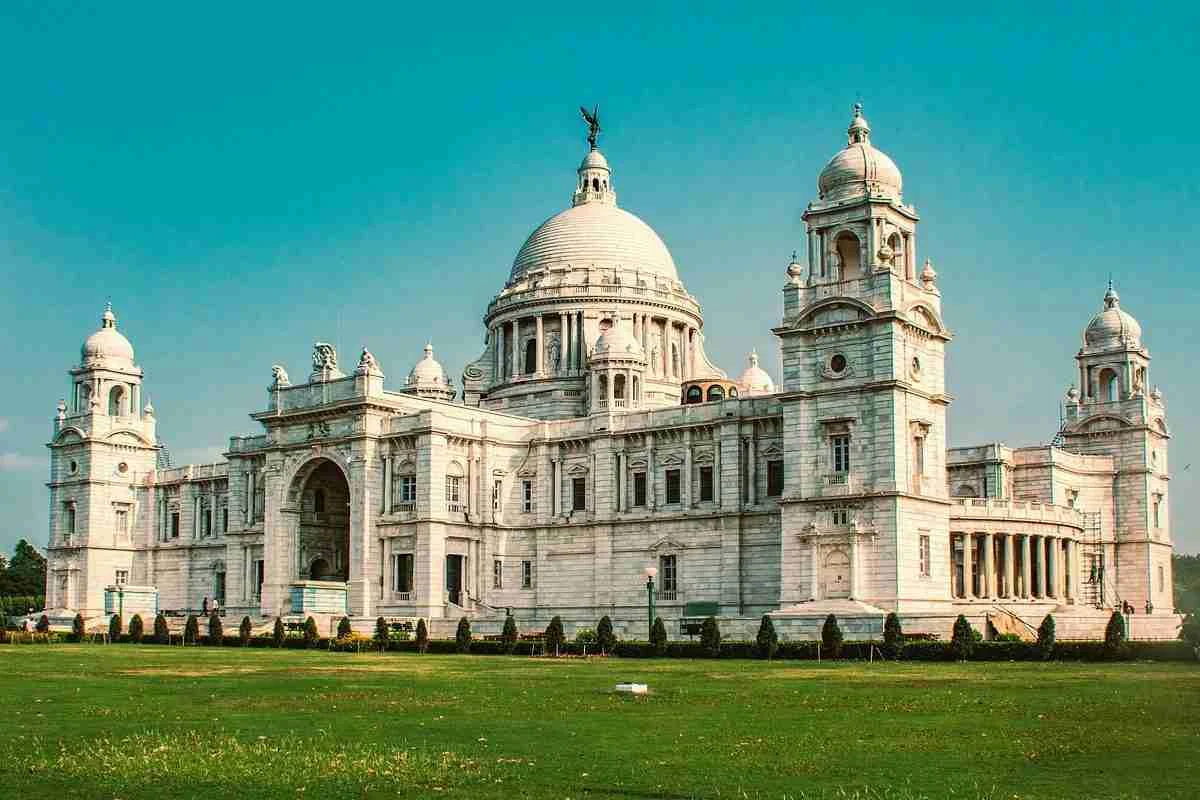
The Victoria Memorial’s architecture boldly displays Kolkata’s colonial past. Surrounded by lovely grounds, this magnificent marble edifice is dedicated to Queen Victoria. It serves as a museum that displays British-era relics such as historical papers, paintings, and sculptures. The Victoria Memorial is a must-see because of its Indo-Saracenic architecture and serene garden setting. The nighttime sound and light display enhances the cultural experience by telling the tale of Kolkata’s development over the ages.
The Indian Museum, the country’s oldest and largest museum, is another significant landmark. It has a vast collection that includes rare artifacts, Mughal paintings, and ancient sculptures and fossils. The museum is a fascinating place for history fans and inquisitive minds because of its many displays, which offer a deep dive into India’s rich history and scientific background.
The spiritual variety of Kolkata is another well-known feature. On the eastern bank of the Hooghly River sits the famed Hindu shrine known as the Dakshineswar Kali Temple, which is devoted to the goddess Kali. With its nine spires and tranquil riverbank location, the temple complex welcomes thousands of worshipers and tourists every day. It has a strong connection to the mystic Ramakrishna Paramahamsa, whose teachings and life have greatly impacted the city’s spiritual climate. A trip here provides an insight into Kolkata’s rich devotional culture and religious customs.
The Ramakrishna Mission’s headquarters, Belur Math, is located near Dakshineswar. This building’s distinctive fusion of Christian, Muslim, and Hindu themes represents the harmony of all religions. It is a location for peaceful reflection and inspiration because of the serene surroundings, expansive gardens, and the marble temple devoted to Sri Ramakrishna.
Rabindranath Tagore’s home in Jorasanko is a must-see for anyone interested in literary and cultural history. The Nobel laureate poet and philosopher’s ancestral home is now a museum honoring his life and contributions. It sheds light on Bengali art, music, and literature as well as the early 20th-century cultural revival that Tagore sparked.
The Birla Academy of Art and Culture and the Academy of Fine Arts are two locations that showcase Kolkata’s thriving art scene. Exhibitions of Indian art, both traditional and modern, are frequently held at these institutions. The city’s artistic landscape is further enriched by street art and regional artisan fairs.
Without visiting Kolkata’s vibrant markets, a visit would not be complete. One of the most well-known and historic shopping places is New Market, also called Sir Stuart Hogg Market. Everything from fresh food and spices to jewelry and textiles may be found here. With its tangle of stalls and amiable vendors, New Market’s chaotic charm provides a true taste of local life in Kolkata. A refuge for book enthusiasts, the College Street neighborhood is well-known for its bookstores, antique shops, and literary cafes.
The food culture in Kolkata is yet another gem. The city is well-known for its sweet shops and street food. Sample regional specialties such as kathi rolls (wraps stuffed with marinated meat or vegetables), puchkas (a spicy, tangy take on pani puri), and desserts like sandesh and rasgulla. A genuine taste of Bengali food, which is renowned for its delicate flavors and concentration on rice, lentils, and fish, can be found at food booths and traditional restaurants.
The Alipore Zoological Gardens, one of India’s oldest zoos, is a well-liked destination for those who enjoy the outdoors. It has contributed significantly to wildlife conservation and education in the area, and it is home to a diverse range of animals and birds. There are plenty of open places for strolling, bicycling, and outdoor activities in the nearby Maidan neighborhood, which is frequently referred to as the “lungs of Kolkata.”
The Writers’ Building, the General Post Office, and St. Paul’s Cathedral all have architecture that reflects Kolkata’s colonial past and provides insights into many facets of the city’s development. Exploring center Kolkata is a visual feast thanks to the fusion of Indo-Saracenic, Neoclassical, and Gothic architectural styles.
The South Park Street Cemetery also serves as a historical landmark that captures the spirit of British colonialism. In addition to offering a peaceful setting for introspection, the cemetery’s ancient tombstones, monuments, and mausoleums tell tales of the city’s early European settlers.
In terms of nightlife and entertainment, Kolkata boasts a vibrant cultural calendar. With locations like the Academy of Fine Arts and Nandan holding plays, film festivals, and literary events, the city is well-known for its love of theater. Filmmakers and moviegoers from all over the world go to Kolkata for the annual Kolkata International Film Festival. Throughout the city, music enthusiasts can take in jazz clubs, classical performances, and exciting nightlife venues.
The Sundarbans, the biggest mangrove forest in the world and a UNESCO World Heritage site, are close to Kolkata and offer a different kind of experience. Despite being somewhat of a drive from the city, it provides incredible wildlife experiences, such as the opportunity to see the elusive Bengal tiger in its native environment. This is a special place for nature lovers to go on boat safaris through meandering rivers and verdant surroundings.
To sum up, Kolkata is a city that celebrates diversity and complexity: colonial mansions and ancient temples cohabit, lively markets and cerebral cafes hum, and traditional celebrations and contemporary art exhibits coexist. Every street and landmark in the city tells a tale of its dynamic present and rich past.
When you travel to Kolkata, you enter a world where spirituality, culture, history, and daily life all coexist harmoniously. The city’s intellectual spirit, artistic personality, and kindness inspire visitors to experience its distinct character firsthand. Kolkata gives an experience that lingers long after you depart, whether it’s the majesty of its monuments, the scent of its street cuisine, or the cadence of its cultural festivals.